

- Conservation
- 23 April 2026
Journey to St François Atoll, with Blue Safari
Arriving at St François Atoll with Blue Safari begins long before your feet touch the sand. A 40-minute run along the western edge of the atoll sets the tone.
Your guide reads the water as you move, tracking bird behaviour, scanning for surface disturbance, interpreting what lies just beyond sight.
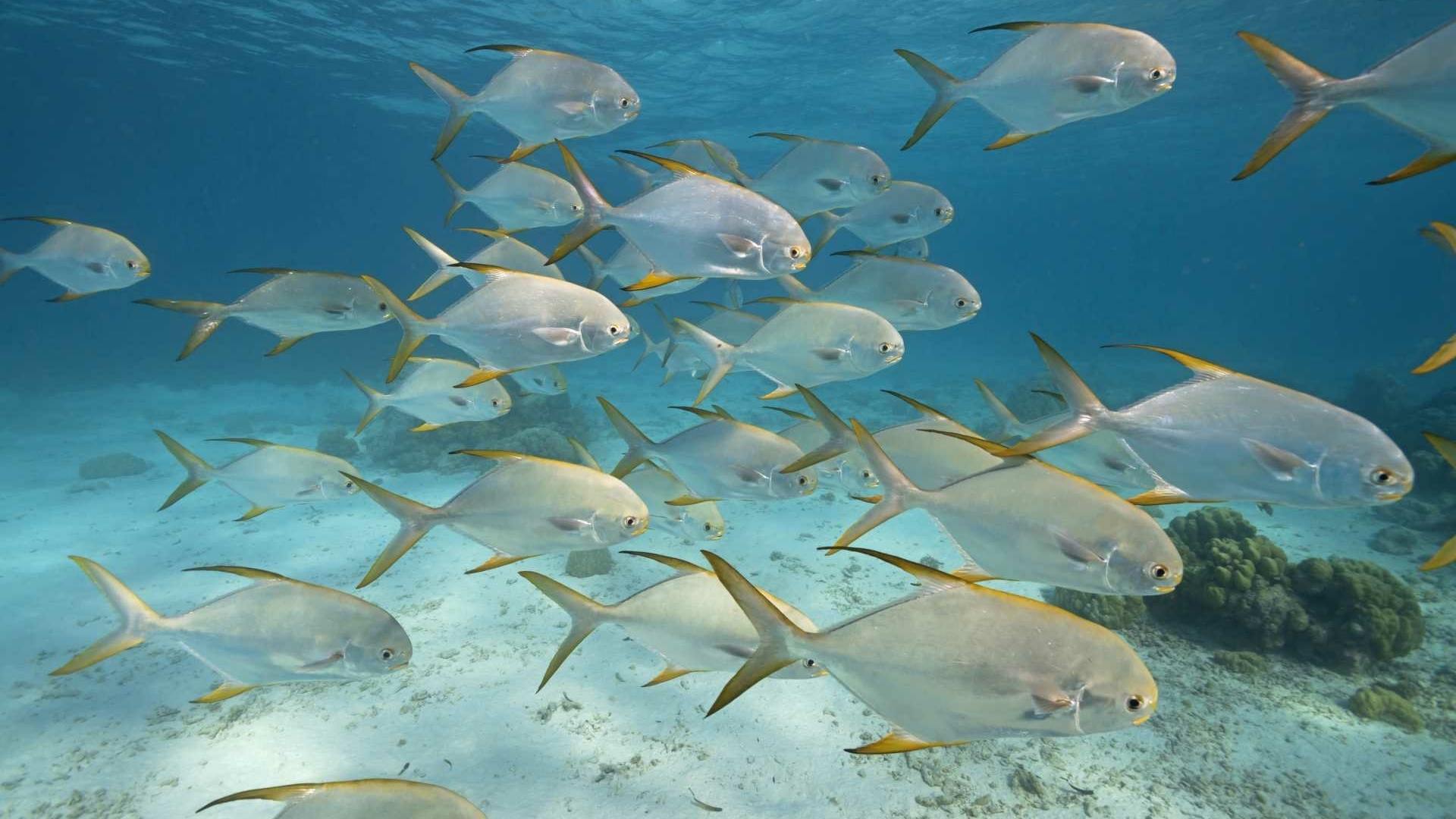
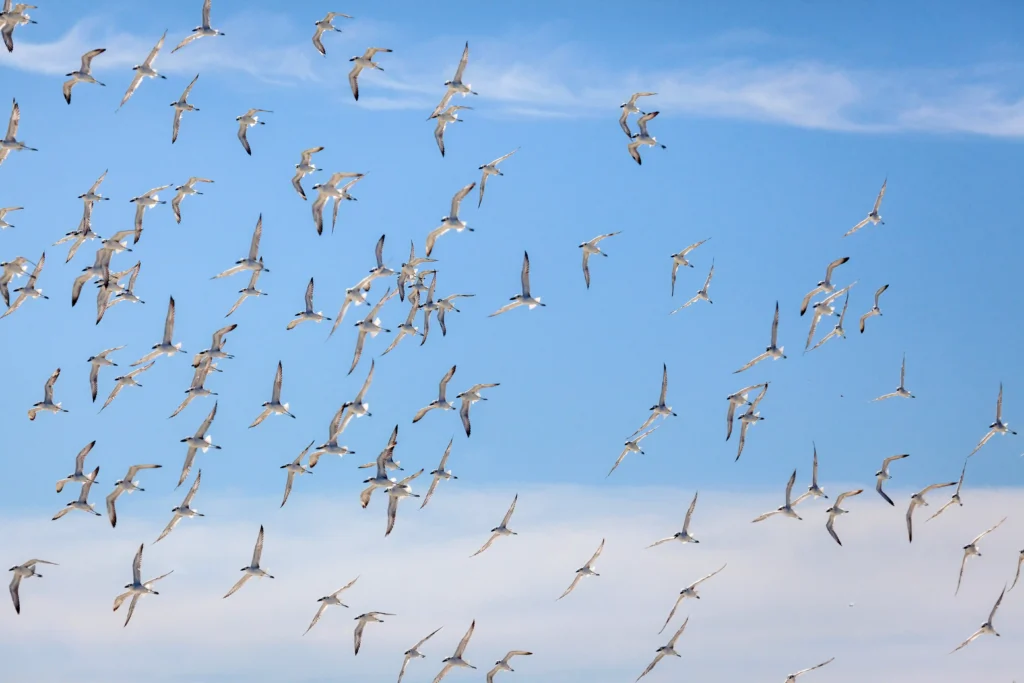
Pods of spinner dolphins (Stenella longirostris) move effortlessly through the wake, their bodies catching the light as they arc and turn, keeping pace with the boat before peeling away into deeper water. Overhead, seabirds gather and tighten into formation, their calls sharp against the wind before they drop suddenly into bait balls below. Along the edge of Bijoutier, the surface breaks in bursts – fish pushing upward, birds diving, the ocean briefly revealing what lies beneath.
Salt sprays on your skin. Wind pulls at your shirt. And then, just as quickly, it shifts.
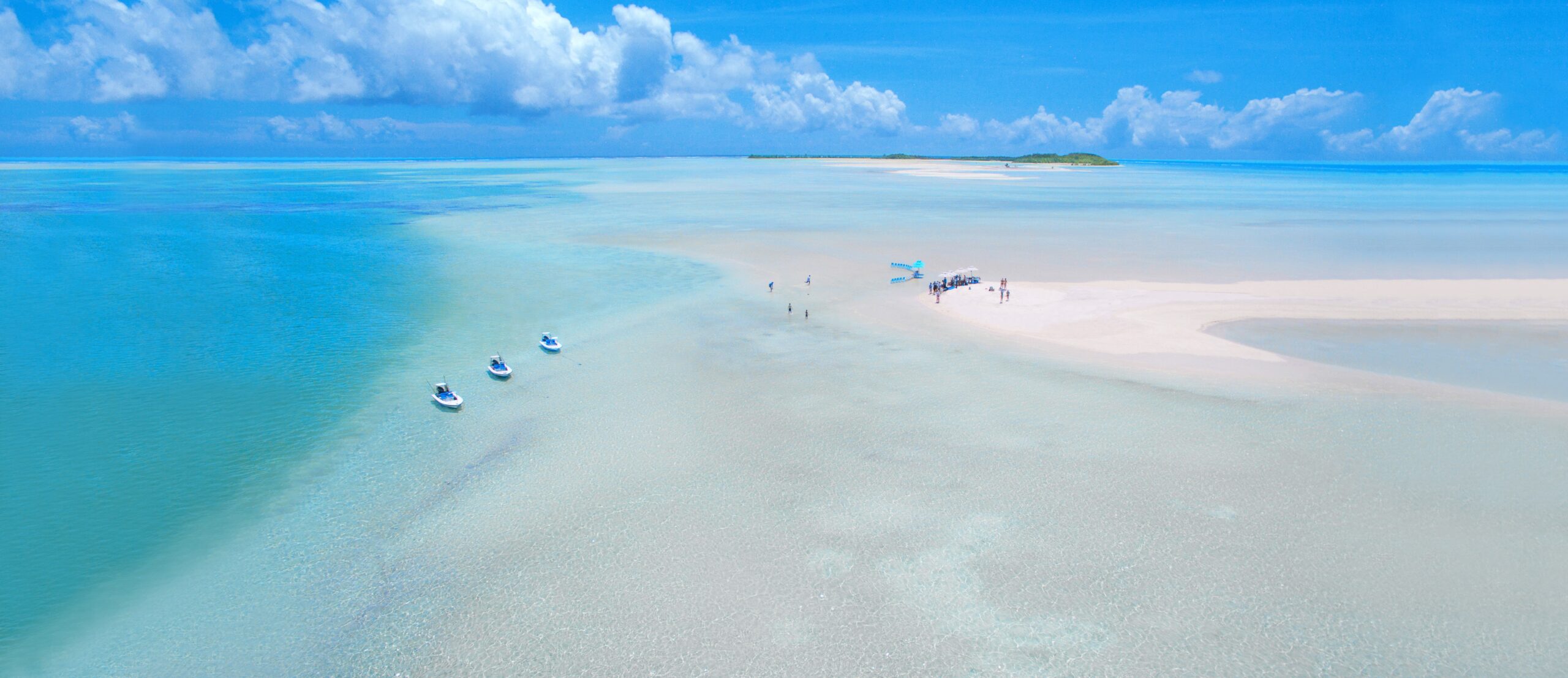
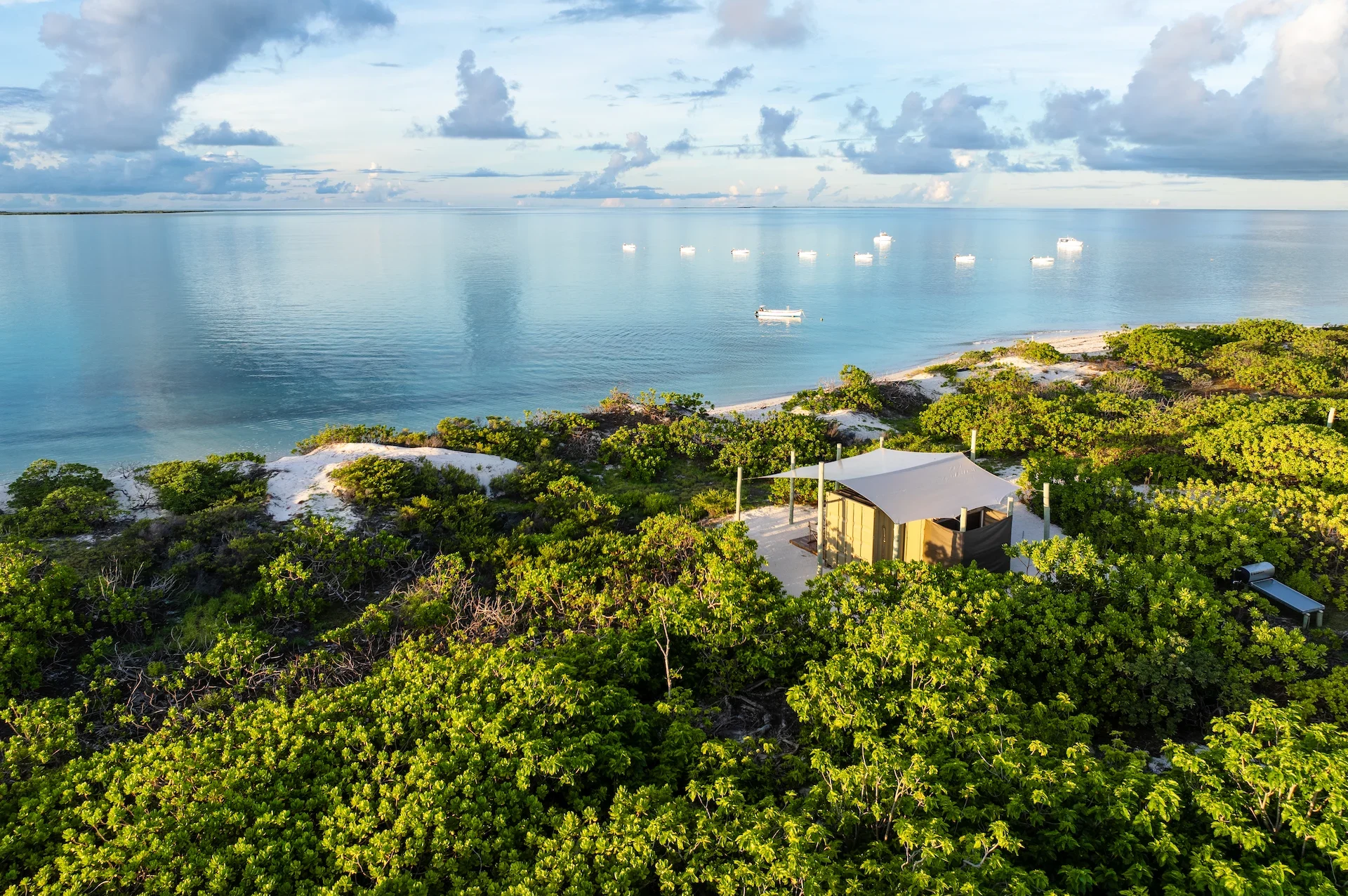
As the boat enters Ray Ray’s Channel and slips into the lagoon of St François Atoll, the water flattens and clears. Colours sharpen into pale blues and sand-white shallows. The engine drops to a low idle.
Red-footed boobies (Sula sula) circle above the treeline, while green sea turtles (Chelonia mydas) surface softly before slipping back beneath the glassy water.
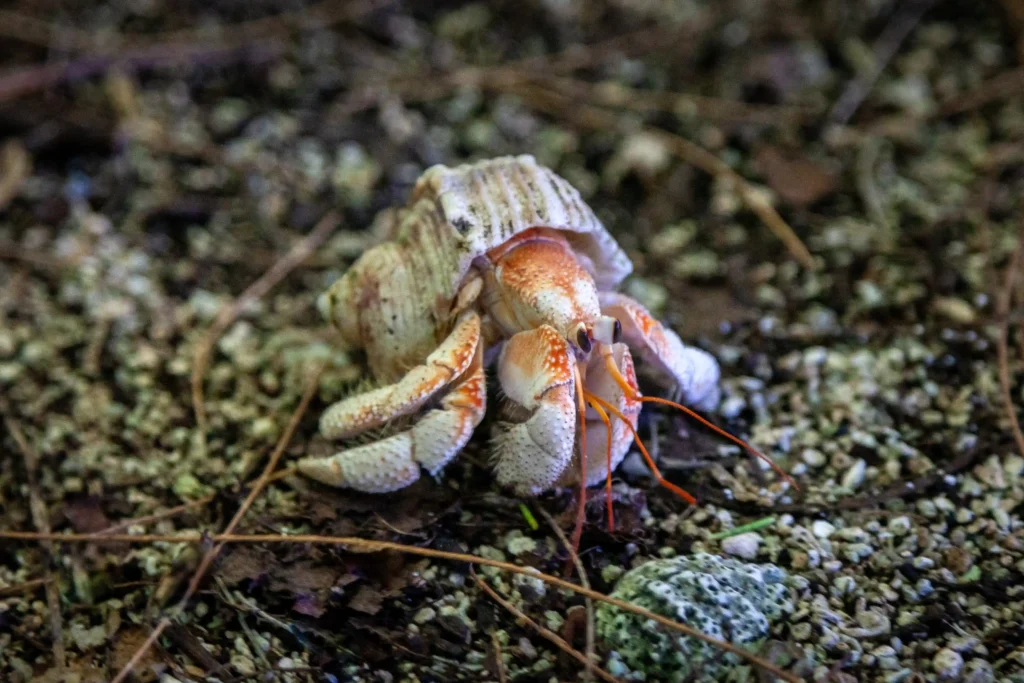
Hermit Crabs, Frigatebirds and the Living Edge of St François Atoll
Stepping ashore, it’s not the view that holds your attention – it’s the movement.
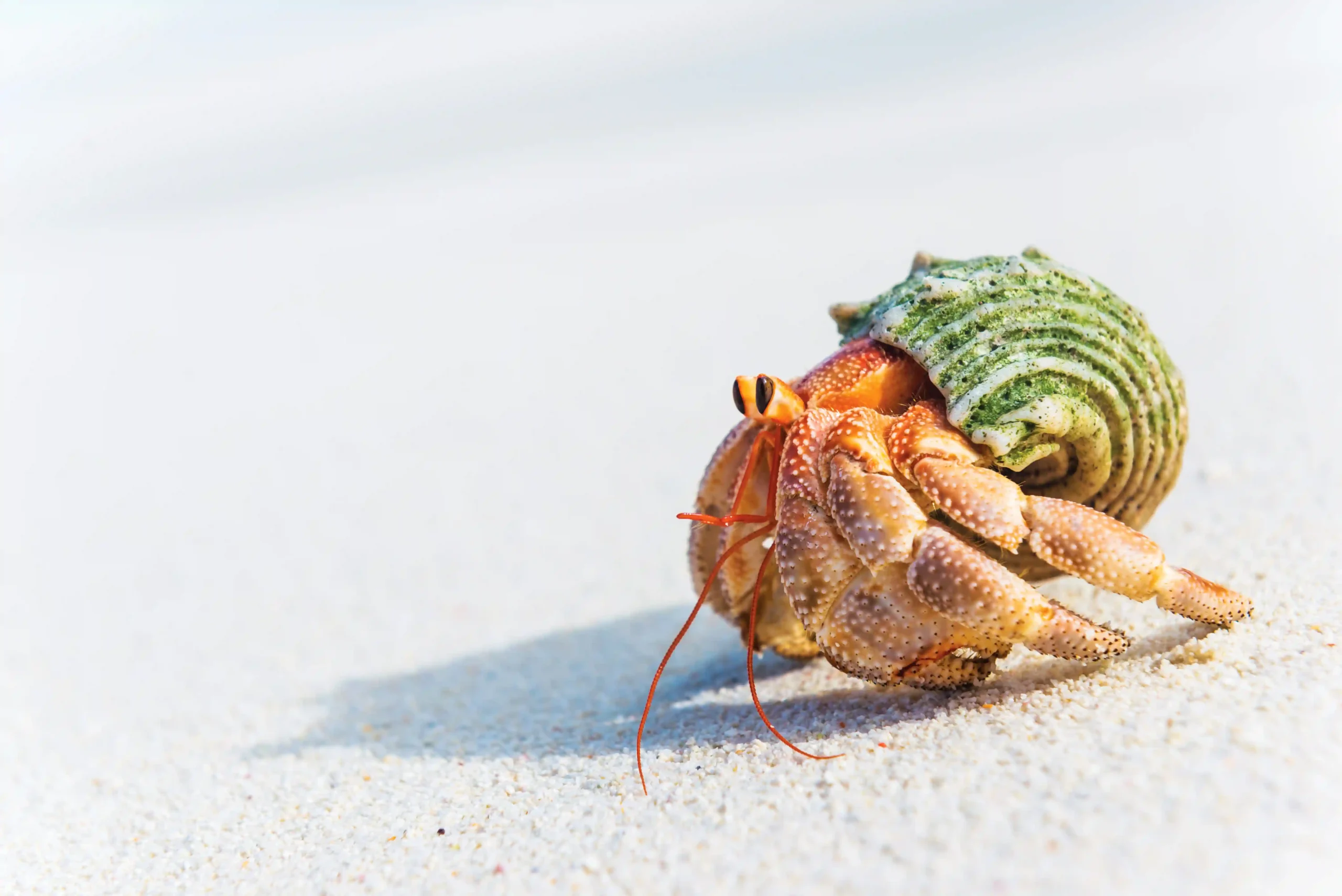
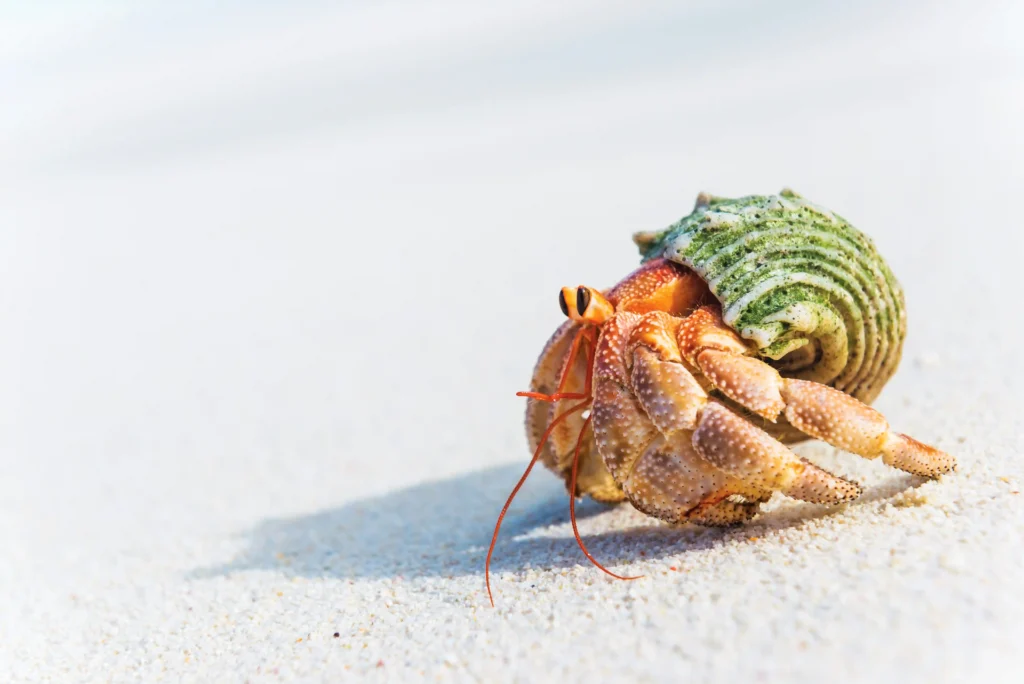
The shoreline is alive with hermit crabs, each carrying a borrowed shell, weaving steadily through the Scaevola bushes that fringe the beach. What first appears still begins to shift, revealing hundreds of small, deliberate movements across the sand.
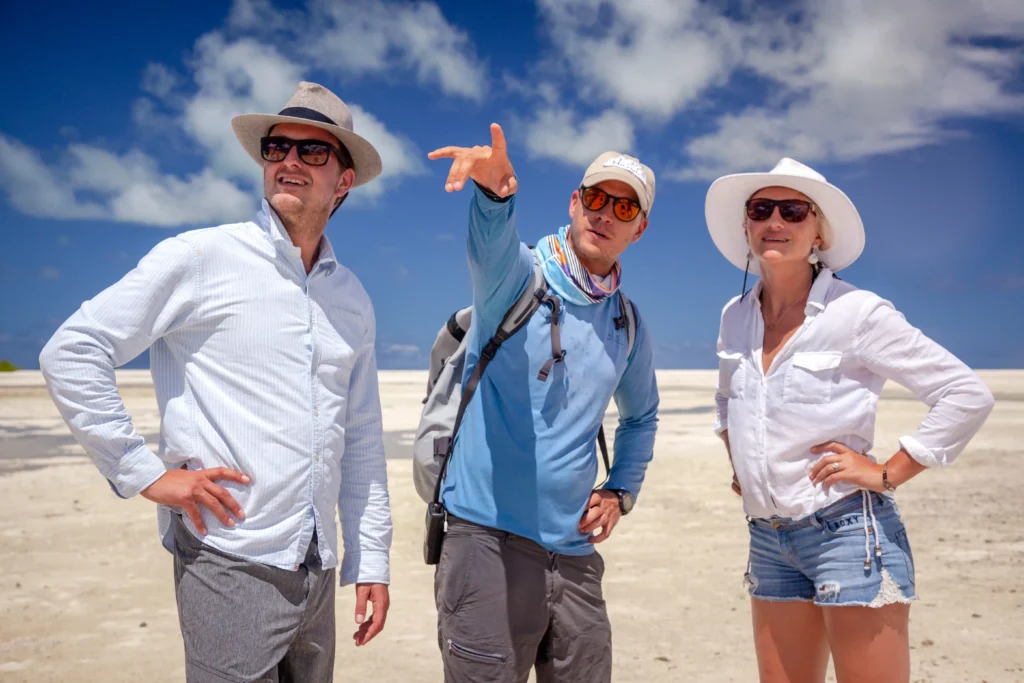
Your guide pauses here – not to move faster, but to show you how to look.
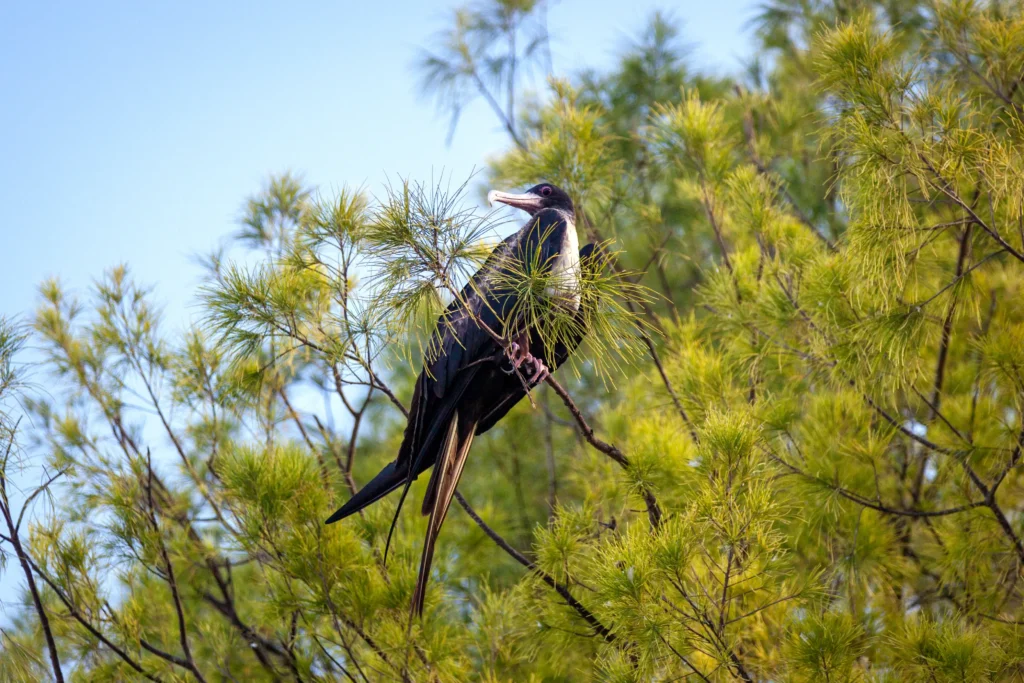
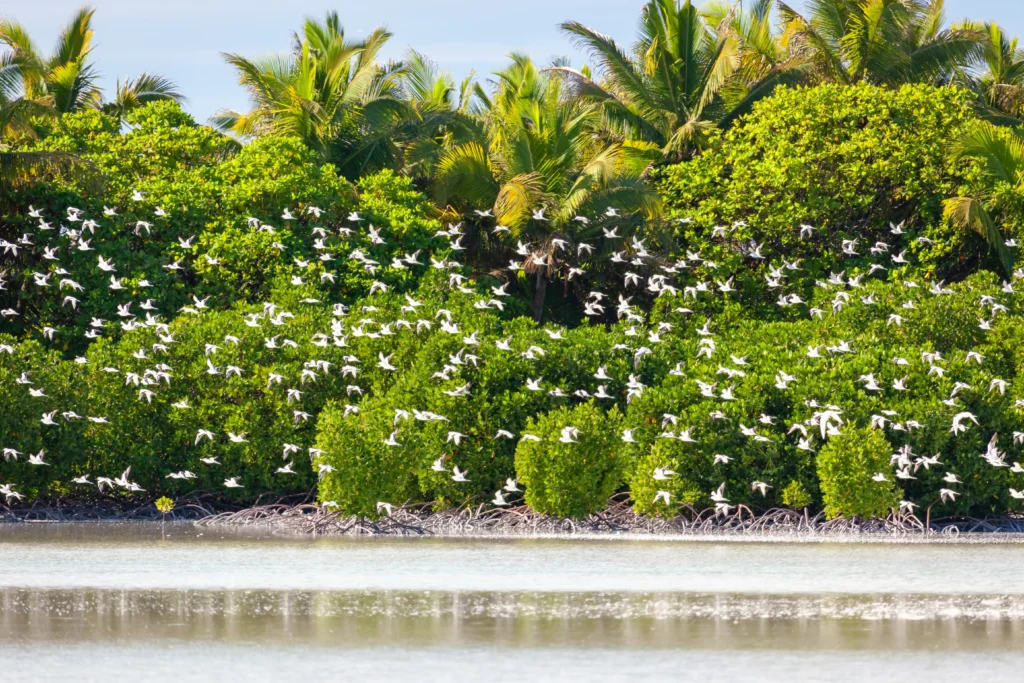
Above, frigate birds (Fregata minor) hang almost motionless in the air, while red-footed boobies nest throughout the canopy. Their chicks, soft and white, sit tucked into the branches, calling intermittently as adults return from long feeding flights over the atoll.
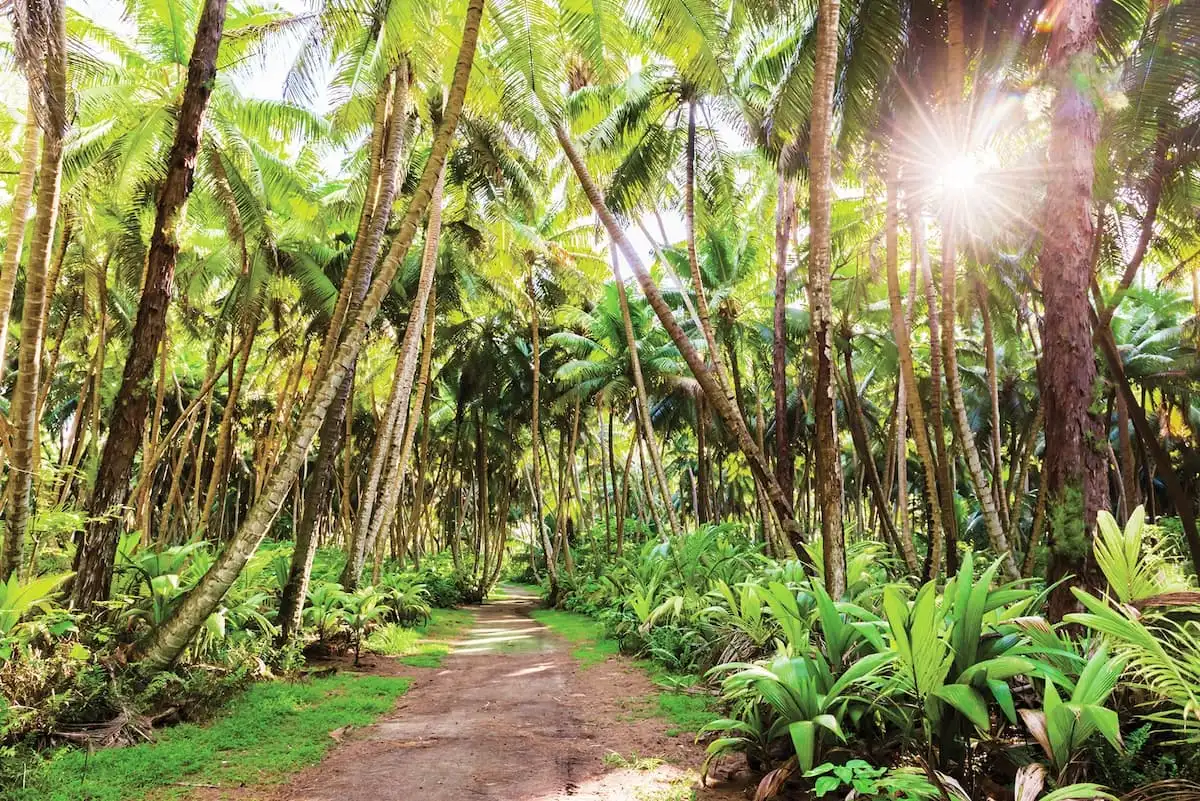
Moving inland, the atoll begins to close in around you.
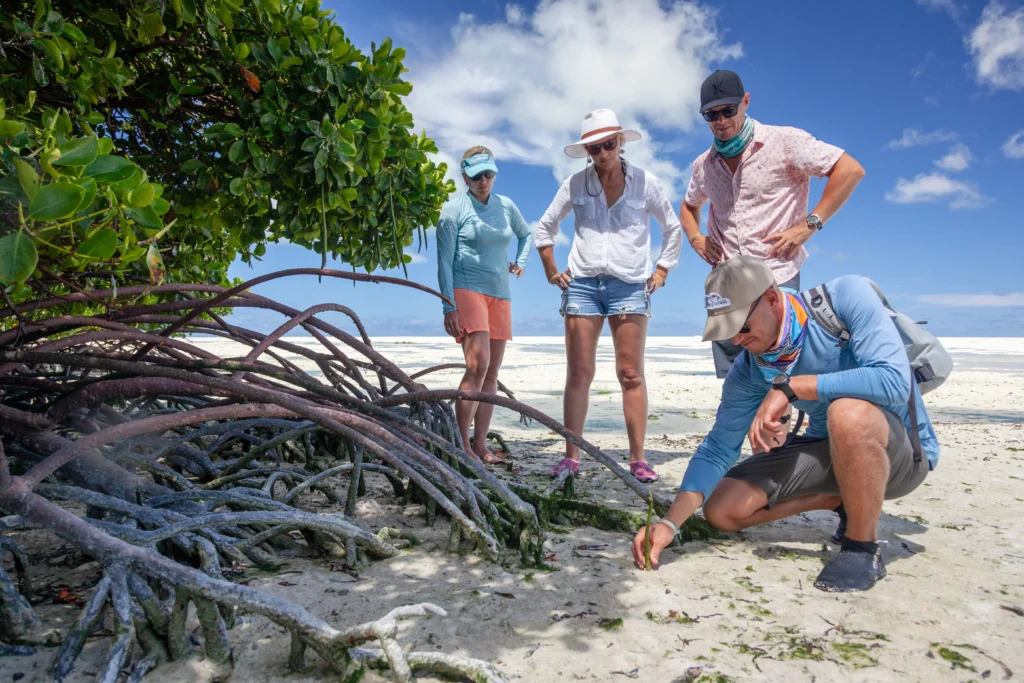
Mangroves, Nursery Grounds and Conservation in Action
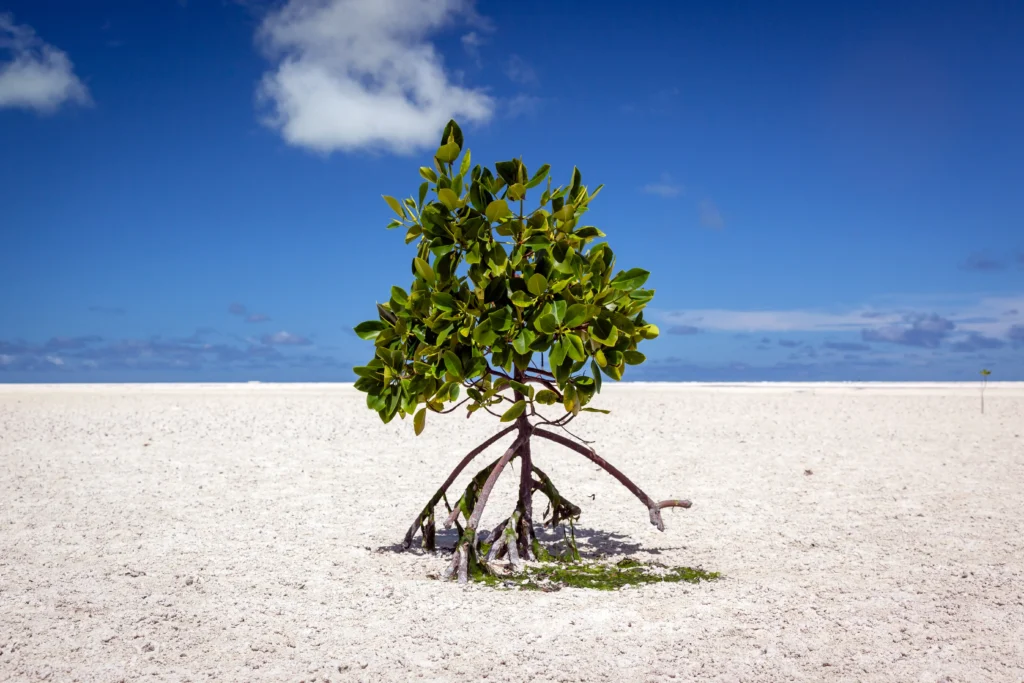
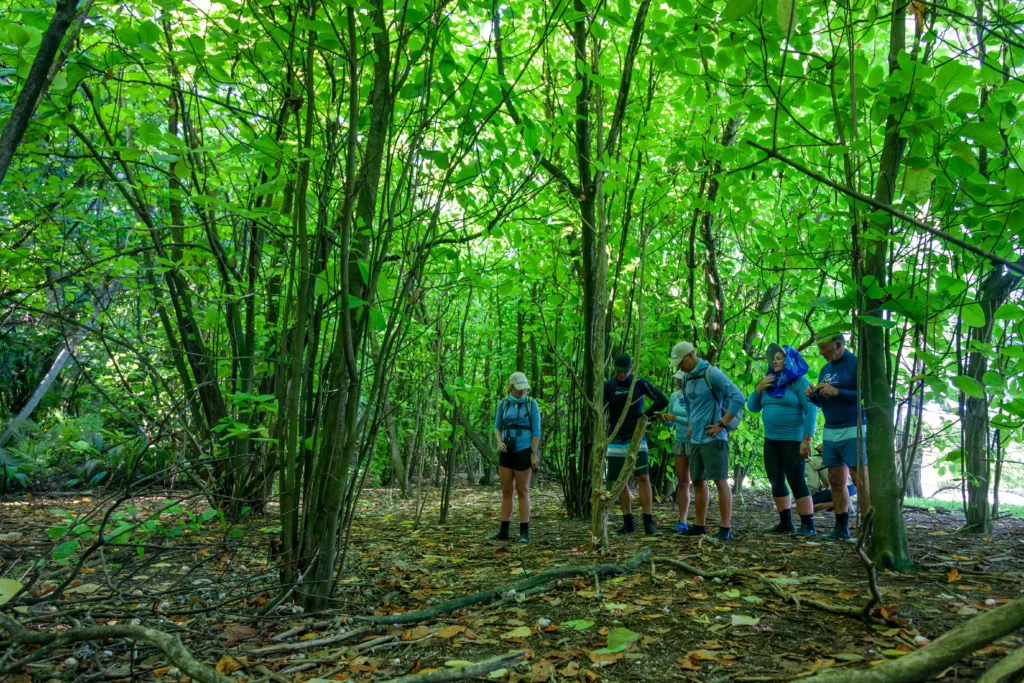
The mangroves form dense, interwoven root systems, their arching structures rising from the water like a natural barrier.
At high tide, the sound shifts – water laps softly against the roots, small fish flick beneath the surface, and movement reveals itself in flashes. Juvenile sicklefin lemon sharks (Negaprion acutidens) thread slowly through the mangroves, using the shallow, protected water as cover.
These mangrove systems function as critical nursery habitats because of specific, delicate conditions – warm, shallow water, protection from larger predators, and a constant exchange of nutrients driven by the tides.
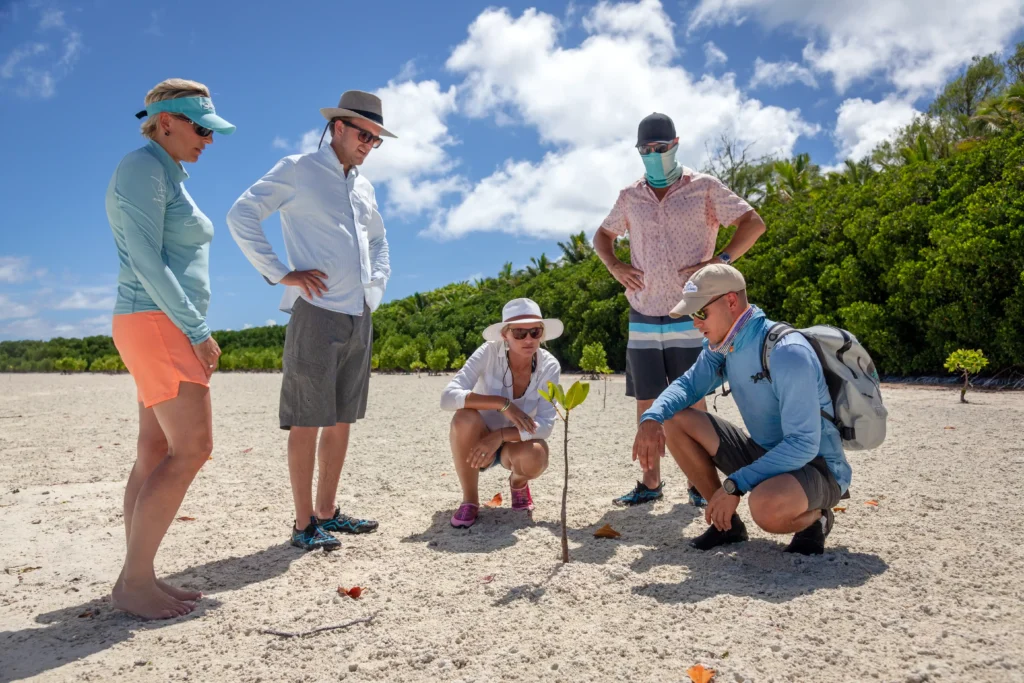
Your guide interprets this space not just as a landscape, but as a system – one actively studied and protected through the work of the Alphonse Foundation and its partners. Ongoing monitoring, species tracking, and strict codes of conduct ensure that this habitat continues to function as it should.
Freshwater Beneath the Sand: The Hidden System of St François
Beneath your feet, unseen, lies the freshwater lens.
Rainwater filters through the sand and settles below the surface, forming a thin but vital layer that sustains life across the island. On an atoll surrounded entirely by saltwater, this hidden system supports everything – from low coastal vegetation to the palms that rise further inland.
Your guide points out the subtle shifts in vegetation – how certain species indicate the presence of freshwater below.
Juvenile Sharks and Stingrays: Inside St François Atoll’s Lagoon
Emerging from the trees, the landscape opens into a wide, shallow lagoon. The light reflects off the sand, the water barely moving, stretching out in pale blues and silvers.
One of the most active nursery areas within the Alphonse Group
Juvenile sicklefin lemon sharks (Negaprion acutidens) move slowly through the warmer water, often in small groups, their presence revealed by subtle shifts in the surface.
Across the lagoon floor, four species of stingray are regularly encountered:
• Pink whipray (Pateobatis fai)
• Porcupine ray (Urogymnus asperrimus)
• White-tailed mangrove ray (Himantura granulata)
• Feathertail ray (Gymnura zonura)
Each moves differently. Some glide just beneath the surface, others settle into the sand, barely visible until they lift and disappear again.
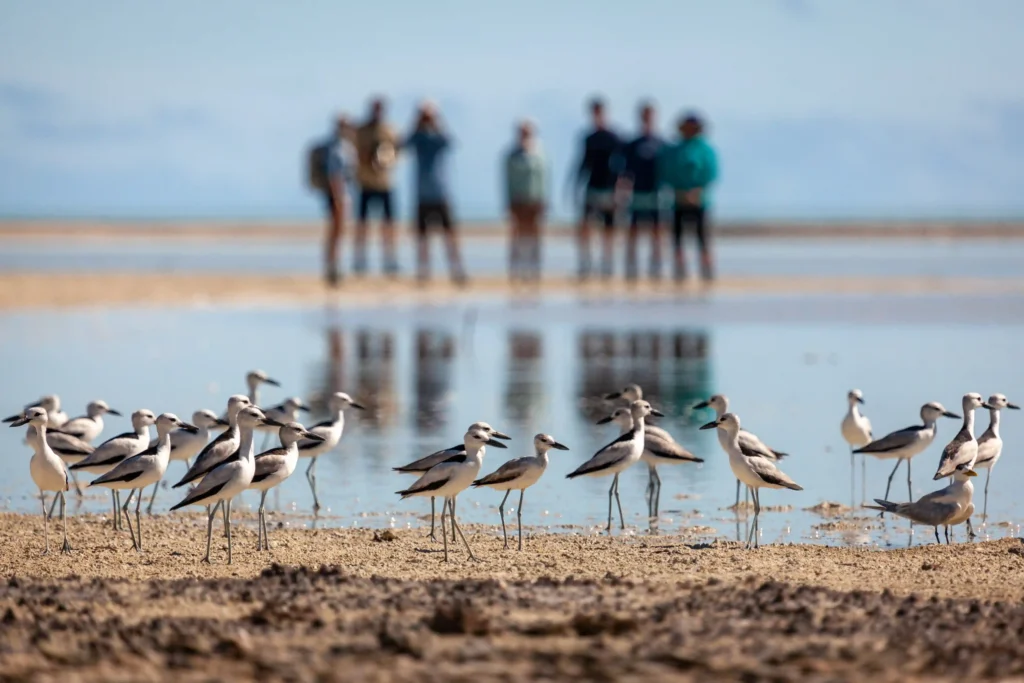
Birdlife concentrates here too. Terns and plovers move quickly along the edges, while herons stand motionless, watching the water with complete focus. Your guide slows your pace here – in this environment, speed causes you to miss things. Nothing is rushed.
The Silence of a Remote Atoll – A Blue Safari Experience
There is a moment that comes without warning. It’s not marked by a sighting, but by a shift. The wind drops. The movement slows. And suddenly, there is nothing competing for your attention.
No engines. No distant hum. No background noise.
Only the faint call of a bird, carried across the lagoon, and the soft movement of water over sand. Through Blue Safari, this kind of access – to remoteness, to functioning ecosystems, through guided stillness – is intentional.
And it’s rare.
A Living System: Why St François Atoll Matters
As the walk draws to a close and the boat returns across the lagoon, the experience lingers differently. Not as a single highlight, but as something gradually understood.
On St François Atoll, nothing exists in isolation.
The tides shape the mangroves. The mangroves protect the lagoon. The lagoon supports juvenile sharks and rays. Rainwater forms the freshwater lens that sustains the island’s vegetation. Birdlife moves between all of it.
And Blue Safari Seychelles exists within this system – not separate from it, but actively working to understand and protect it.
With a guide leading the way, this is a true exploration of a living atoll – experienced through active conservation
previous blog
- Share:


next blog